3 hr
Amber Island Kayak Expedition
Paddle through mangrove channels and explore a historic island off Mauritius' northern shore
Reserve
Hand-picked by our editors — only the best 5 kayak experiences from 18 reviewed.
Verified partners for every tour, free cancellation where available, and instant confirmation on every booking.
3 hr
Paddle through mangrove channels and explore a historic island off Mauritius' northern shore
Reserve
3 hr
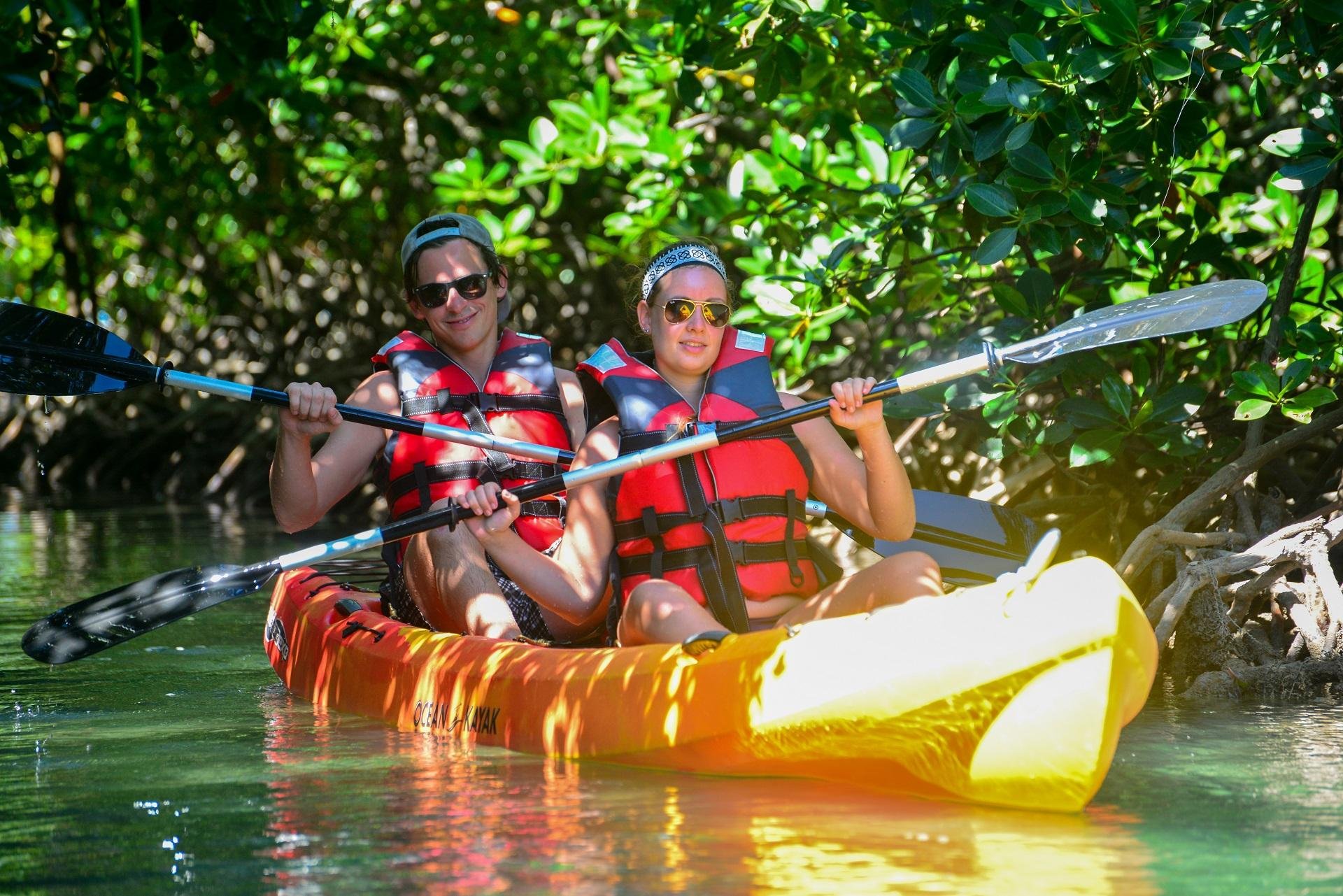
Paddle through protected mangroves to a 137-hectare island reserve, swim in turquoise shallows, and explore colonial ruins.
Reserve
3 hr
Paddle through mangrove channels, swim in turquoise waters, and explore a pristine island on foot
ReservePrices from verified partners. Availability updates in real time at checkout. Free cancellation policies apply where shown.
The landmarks, rooms, and views travelers on this tour remember — all visible on a single visit.
Navigate through narrow, sheltered channels that act as a nursery for juvenile reef fish and diverse marine species.
Discover historical basalt-stone remnants dating back to 1750, showcasing the island's plantation past.
Observe the offshore reefs where the famous vessel mentioned in 'Paul et Virginie' met its tragic end in 1744.
Walk along well-maintained government-built nature trails that wind through degraded forest and rocky volcanic terrain.
Explore the interior of the island to spot native bird species, including the common moorhen, in the protected marsh areas.
Amber Island offers a serene exploration of coastal mangroves, while Tamarin River excursions focus heavily on dolphin spotting and riverine wildlife. Most visitors choose the former for peaceful nature immersion and the latter for active marine mammal encounters through kayak amber island tours.
| Feature | Top pick Amber Island | Tamarin River |
|---|---|---|
Primary Focus |
Mangrove ecosystem exploration | Dolphin and river wildlife;Environment |
| See tickets → |
Verdict: Select a kayak amber island tour for tranquil botanical discovery, or opt for the rival river experience if prioritizing wildlife-centric interactions during your Mauritius landmarks tour via kayak amber island tickets.
Choose your ticket, select your date, and reserve in under two minutes. Secure checkout handled by our verified partner.
Instant confirmation by email, with a mobile voucher you can save offline. No printing, no queuing at a collection desk.
Arrive at the entrance, show your voucher on your phone, and walk in. Most tickets include priority or skip-the-line access.
Practical details for your visit straight from our verified partners — hours, access, rules, and how to get there.
Wear light, quick-drying clothing and UV-protective gear. Sturdy water shoes or sandals are highly recommended for navigating basaltic trails and mangrove roots.
Use a dry bag to protect your belongings while on a kayak amber island excursion. As this is a protected nature reserve, please carry out all waste you bring onto the island.
The dense mangrove tunnels and historical ruins offer exceptional settings for nature photography. Please be mindful of sensitive vegetation and nesting seabirds when framing your shots.
The island terrain features uneven basalt trails and rocky paths which may be challenging for those with limited mobility. Kayak amber island access requires basic physical fitness for paddling and boarding.
This nature reserve is suitable for family-friendly exploration. Children should be supervised at all times near the water and on the island's interior nature walks.
There are no shops or restaurants on Île d'Ambre. Visitors are advised to bring sufficient water and snacks, or book a guided kayak amber island tour that includes a picnic lunch.
Best time to go, insider tips, nearby landmarks, and the cancellation fine print — flip through to skim what matters to you.
Flexible, no hidden fees.
For guided kayak amber island tours, cancellation requests made less than 5 days before the scheduled trip are non-refundable. Entrance to the nature reserve itself remains 0 MUR at all times.
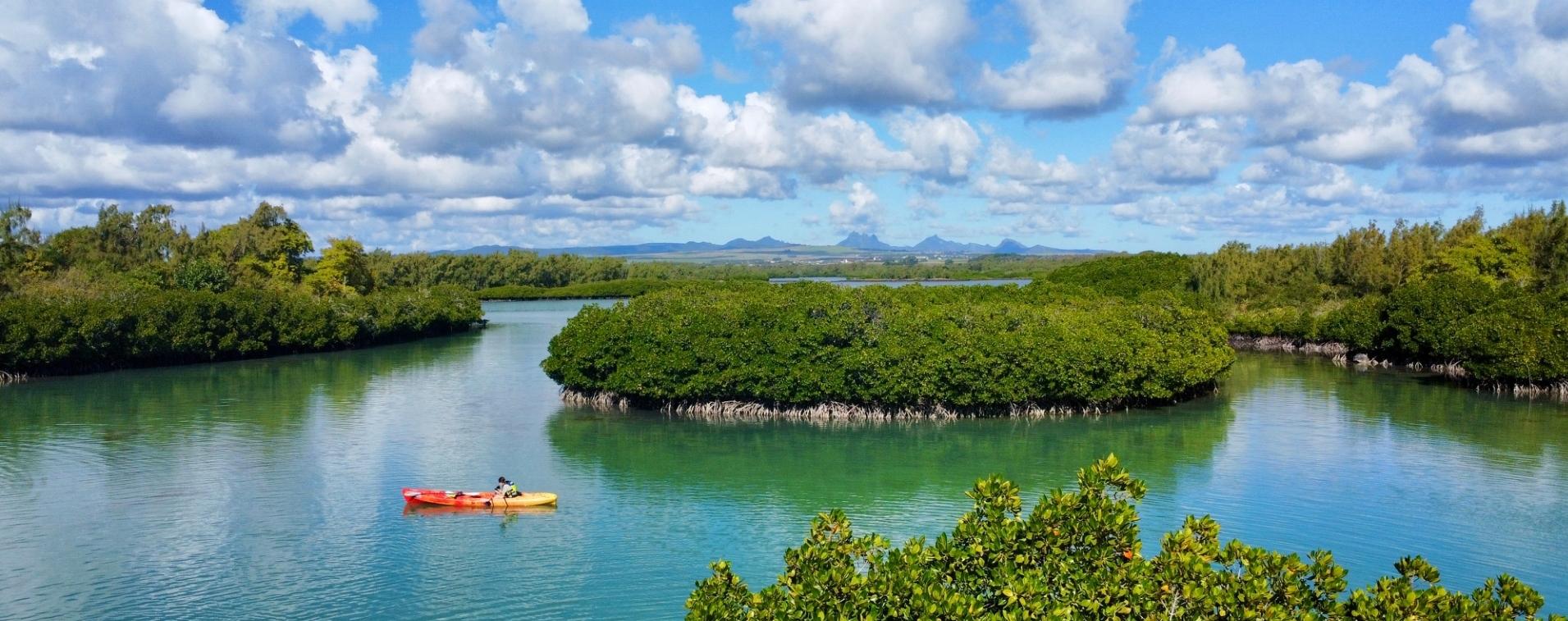
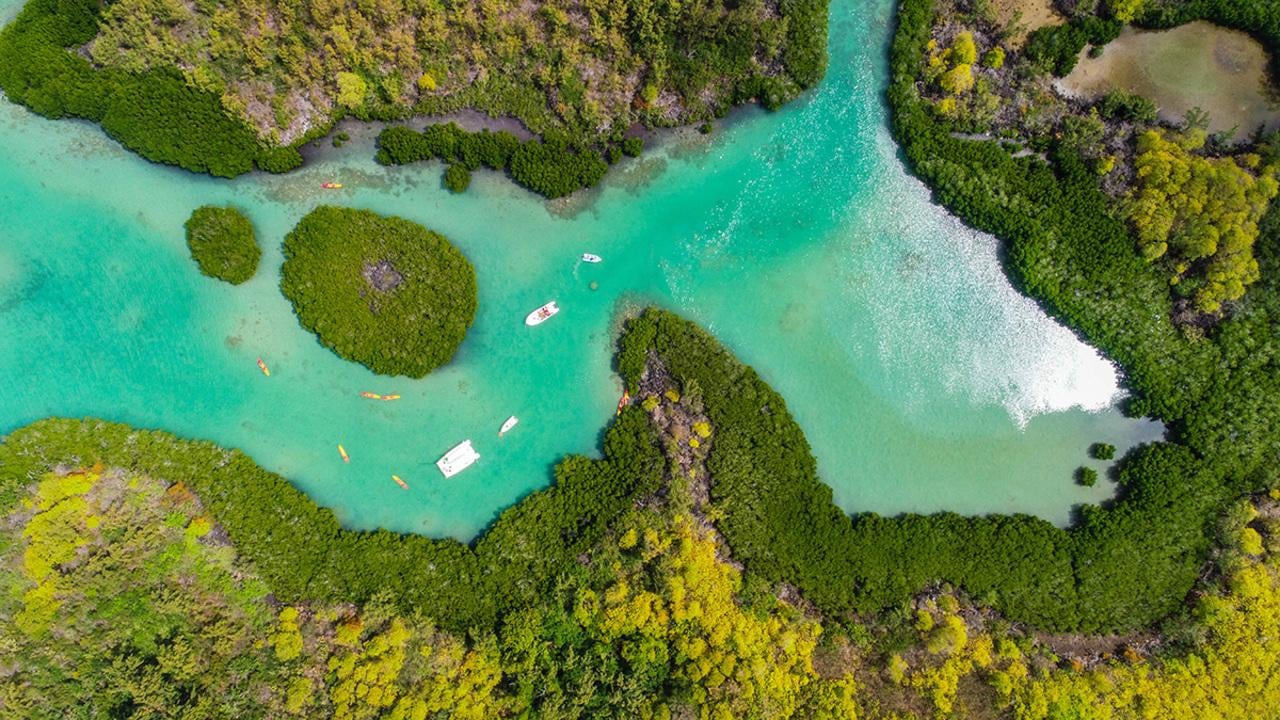
Île d'Ambre sits 800 meters off Mauritius' northeast coast, a 142-hectare uninhabited sanctuary where mangrove forests cover sixty percent of the landmass. The island was named by Dutch sailors in the seventeenth century who mistook fossilized resin deposits along the shore for amber. No roads cross the interior. Access is by shallow-draft boat or kayak only, a constraint that has preserved the island's ecology for three centuries. The mangrove channels that ring Île d'Ambre form one of the Indian Ocean's densest stands of Rhizophora mucronata and Bruguiera gymnorhiza, species that anchor sediment and shelter juvenile fish populations for the surrounding reef system. Paddling through the forests reveals a hydraulic architecture: prop roots descend from branches to stabilize trunks against tidal flux, while pneumatophores rise from submerged roots to exchange gases at low water. The canopy filters sunlight into shafts that shift with the tide, illuminating water that runs gin-clear over sand channels and dark green over deeper mud. Ecologists count over forty bird species on the island, including colonies of grey herons and lesser noddies that nest in the taller mangrove crowns. Monitor lizards, some approaching a meter in length, bask on exposed roots at midday. The forest floor supports populations of land crabs that excavate burrows above the high-tide line, aerating soil that would otherwise compact under seasonal flooding. Marine biologists have documented nursery grounds for barracuda, snappers, and groupers within the root lattice, where juveniles shelter from open-water predators. Visitors paddle the eastern channel network where water depth holds steady between one and two meters, routes that remain navigable across both tidal phases. The experience depends on physical engagement rather than interpretation—no boardwalks, no signage, no cafés. Guides lead expeditions that combine kayaking with island walks along narrow trails through coastal scrub, where native hardwoods like bois d'ébène and bois de fer grow in pockets of deeper soil. The reserve charges no entrance fee, a designation that reflects its status as protected public land under Mauritian conservation law.
"No roads cross the interior—access is by shallow-draft boat or kayak only."
A step-by-step walkthrough of the visit — what you'll see, how long each stage takes, and the details that matter.
You launch from the northeast coast in early morning, when the lagoon lies flat and the sun angles low across the water. The kayak glides over sand channels visible three meters down, then enters the mangrove threshold where the water darkens and temperature drops two degrees. Paddle strokes echo off the root walls. You thread narrow passages where branches meet overhead, forming tunnels that block direct sun. Herons lift from the canopy as you pass, their wingbeats loud in the enclosed space. The guide points out juvenile fish darting between roots, their bodies translucent against the sand. You pause in a wider basin where the current slackens, resting the paddle across the gunwales while a monitor lizard watches from a horizontal branch. After an hour on the water, you beach the kayak on the island's western shore and walk inland along a trail marked by coral-stone cairns. The forest opens into drier ground where hardwoods replace mangroves. You reach a clearing with views north toward the outer reef, then return to the kayaks and paddle the southern channel back to the launch point, arriving as the mid-morning breeze begins to roughen the lagoon surface.
The nature reserve is accessible 24 hours a day, 00:00–23:59, though daylight is required for navigation. We recommend arriving during the 07:00–10:00 window for optimal conditions.
No, the entrance fee is 0 MUR (Free entry to the nature reserve).
The best arrival window is 07:00–10:00 for the calmest waters and cooler temperatures. This time is ideal for those planning to kayak amber island routes.
Yes, several local operators provide guided kayak amber island tours that include equipment and expert navigation through the mangroves.
Yes, you can visit the island freely as it is a public nature reserve, though joining a professional kayak amber island tour is safer for mangrove navigation.
Yes, the experience is suitable for families, provided children are supervised. Ensure they are comfortable with water activities before booking a kayak amber island trip.
You should bring water, sunscreen, insect repellent, a hat, and a dry bag. Wear comfortable water shoes for walking on the basaltic terrain.
There are no shops or facilities on the island. Please ensure you have sufficient water and food, or join a tour that provides lunch.
Yes, many visitors enjoy snorkeling in the calm lagoon around the island during their kayak amber island adventure.
The island is accessible by boat or kayak from the mainland, typically departing from nearby villages like St. Antoine or Bain de Rosnay.